History - Facts - Figures
o In 1999, Vibe Magazine predicted that companies in the next millennium would pay people to get tattoos advertising their brands. In March 2001, American professional basketball player Rasheed Wallace rejected an offer from advertising firm Fifty Rubies Marketing to wear a tattoo advertising a candy company's product. However, a month later, the cheerleaders for Lincoln Lightning's High Voltage Dance Team wore 2-inch by 4-inch temporary tattoos that advertised local companies on their bare midriffs. o In September 2001, a prominent online casino paid boxer Bernard Hopkins $100,000 to wear a temporary tattoo on his back during his championship fight with Felix Trinidad, making him the first athlete to wear a tattoo advertisement during a professional sports event. Six months later, the company did the same to participants in the television show Celebrity Boxing. The move was successful, with the casino's web site traffic increasing 200% after the airing of the show. The company has since followed up with temporary tattoos on a topless woman at the 2003 U.S. Open and a streaker who ran at the 2003 French Open as well as the 2003 UEFA Cup final. o In the article, “Tattoo Advertising/Human Billboards” by Eric Goldman, Bodyvertising arose in 2001 and 2002 in the context of athletes selling tattoos. Some companies, such as LeaseYourBody.com, TatAD.com Body Billboardz, HumanBanner.com and LivingAdSpace.com, match tattoo sellers and advertising buyers.
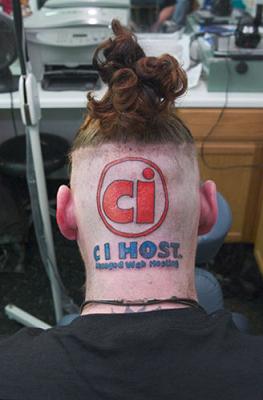 |
o Tattoo advertising has become relatively popular, with a number of companies offering such services, and even large companies like Toyota having used it. However, The Globe and Mail reported that there were more people selling parts of their body for advertising than there were buyers. o Wisely, most sellers only promise to get temporary tattoos. According to HowStuffWork, up to 50% of people who get tattoos regret their decision. Some sellers also have very strict standards. For example, one seller's rules: no swastikas, nothing "racial," no adult stores and no "666, the mark of the beast". o On a never-ending quest to appeal to the young and young-minded, companies from Goodyear Tire & Rubber Co. to Volvo are using tattoos in advertising and promotion. Even wine sellers have adopted the tattoo, with managers of the popular Yellow Tail brand sending 600,000 temporary tattoos out with an October issue of the New Yorker magazine and wine importer Billington Wines taking the name Big Tattoo Wines for its $10 a bottle brand. |
